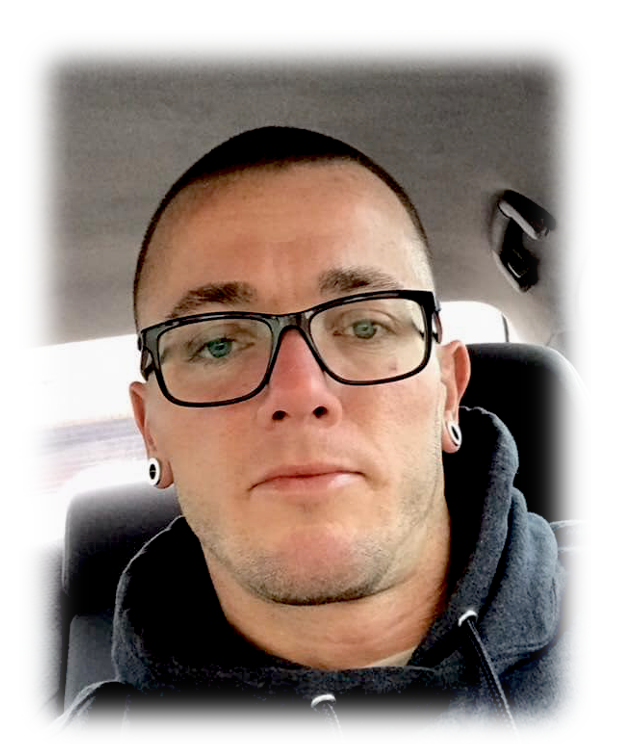
Owen Nathaniel Leed-Ford April 6, 1987 to January 12, 2022.
May He Rest in Eternal Peace
This is difficult to write. It is the one-year anniversary of my son’s Owen’s death. Sadly, I just posted this heartbreaking update to my 2009 blog; Dad on Fire, like I did for the other poor young souls. It was something I did during the formative blogging years of my boy’s battle with drug addiction and diabetes. For years, I kept track of young people who left this world early; perhaps feeling scourged to their bones from drug addiction and the damage of the comorbidities that accompany it. I intend to do this now and share it with you. It is a story that needs to be told for my healing, for those who know me and for others who battle with the disease of addiction within their families and loved ones.
Owen Nathaniel Leed-Ford left the world as he knew it on January 12th 2022. On or about 8:30 PM at St. Mary’s Hospital as he lay in cardiac arrest from complications of a 17-year opioid drug addiction, numerous injuries and severe damage from type one diabetes. He was pronounced dead by the attending staff physician after some attempts to save his life.
The day before, I was informed that Owen was in the hospital. He had been unconscious and unable to communicate his next of kin. When I arrived, Owen was drugged and loopy. His nurse said he was on intervening methadone. I don’t think he knew how serious complicating factors and injuries were at the time. He wasn’t sure about events that had transpired or where he had been. I was working on the Tohono O’odham Reservation earlier that day on a Native American community building as well a clinic for The Tucson Indian Center just breaking ground. I thought of the many Native Americans who fight similar battles with addiction and diabetes.
Five days earlier on January 7th, Owen was picked up by the fire department paramedics as he lay unconscious at a local hotel with several broken ribs, a collapsed lung, keto-acidosis, fentanyl overdose, lesions on his legs and mersa which is common. I still do not know what happened. He had been unconscious for five days.
When I first saw Owen, he was awake. He said he had enough, wanted to get better and go to rehab. I felt the dread of bad timing and dark challenges. He was in bad shape. The attending physician shared little about his condition in the short time I was there. I tried to reject his pending discharge but the doctor said he was stable enough to leave and in fact, had to go; even on his own if need be. Because of his opioid (fentanyl) addiction the hospital had to put him on Methadone. In a numbed state, Owen could not have communicated much about his pain or health needs. After the hospital had mismanaged a plan to transfer him directly to Buena Vista Rehab, he was refused at the last minute for having mersa on his skin. The hospital told us that the Community Bridges Detox facility which has long-term in-patient care would intake him right away. I took him there under protest and in a cloud of frustration and exhaustion.
I was lost to other options available at such short notice. I felt Owen needed long term medical care and the Hospital chose to thrust him between a rock and a hard place. He needed skilled intervention, stabilization and a well-planned methadone bridge that I could not have provided. I couldn’t have known all the details at the time. I realized later, that my son obviously needed serious medical intervention and yet again, he wouldn’t get it. The situation was dire. All that is left to say, is that I miss him more than he will ever know.
I think I understand now. It was like Owen kept being tossed in a 1916 WW1 dirt trench in war torn France having to advance into darkness and certain death; not only this time, but often in his history. In this way he is a warrior to me. He cheated death many times. Who wouldn’t think he could do it one more time? I deeply respect that part of him; the struggles and torture only known in the abyss of addictive disease worsened by impact of comorbidities.
His last precious words were; Dad! I love you as I left Community Bridges Detox Center in Tucson two hours earlier. He was hanging in there but drugged and confused from the methadone. I couldn’t have imagined he would not have stayed there in his condition. I couldn’t have known how fateful that moment really was. I didn’t know it would be the last time I ever saw my son alive.
Painfully, a St. Mary’s ER nurse calls me the following morning. I drop in anguish, hitting my floor with the soul ripping news that Owen had passed. I was angry, distraught and sad beyond comprehension. I frantically opened my eyes to this stark reality. I began to question his last moments. Those fragments of life appeared more important than ever. I went to the hospital. I acquired his medical records. I talked to a store clerk. I visited a Chevron Gas Station. Pieces of Owens last fateful hours and days started to come together.
Eyewitnesses said he was asking for his girlfriend when he arrived at the Chevron Gas Station minutes from my home. He told me earlier, he thought she was in danger. He goes inside and talks to a clerk he knew. He goes back outside. A homeless black man, who I later interview, watches Owen go into a seizure. He collapses on to a cold stained concrete sidewalk. His heart stops beating. He stops breathing. The homeless man gives Owen mouth to mouth resuscitation. When the paramedics arrive, they take over and take him back to St. Mary’s ER unit; only scant hours after he was discharged.
He was pronounced dead. Owen was freed from his suffering. It is the saddest thing I have ever felt in my life and one year later I am still doing grief work, thinking about that fateful day on 12 January, 2022.
17 years earlier, Owen’s struggle with opioid addition began; right after a severe facial injury. He was barely 17. He was drinking heavily and ended up at the wrong place very late one night. He was violently beaten with a milk crate to his face breaking his facial bones. A week later he underwent five hours of surgery. He was given pain killers at his discharge for pain…and apparently mental pain only he knew about. He never got off the opiates and a brand-new addiction seemed to have galvanized. In weeks to come he was diagnosed with late on set childhood diabetes, type 1. It is a depressing realization for a 17-year-old. Studies show that a lifelong sentence to needle injection and late diagnosis can lead to addiction and suicide in teens.
Coincidentally this 17-year-old spent the next 17 years of his life fighting this scourge in a world that seemed blind to solutions and helpless in dealing with it. I knew it was his private living hell and I feared for his life, often waking in the middle of the night in a cold sweat. I think of myself at age 17 with a world ahead of me; full of hope, strength and heart. Absolutely! there was lots of hope and good memories during Owen’s last 17 years and during his first 17; for sure. He was loved by many I knew. He had a heart that exuded care for others and he was smart in ways that couldn’t save him but his life had etched memories …nonetheless.
My cousin Barbara, Jimmy and Sharon lost their older sister Maryanne and their 31-year-old Nephew and son, Shawn to the disease of addiction a few short years earlier. Barbara later shared with me that addiction was much stronger than our love is. This scourge ultimately took Owen. He was freed from his pain at age 34; from something that could only be another tragic lesson.
My partner; wonderfully amazing Sarah and I along with other loved ones, MKP brothers and friends memorialized Owen on Martin Luther King Day, January 17th. 2022. He was laid to rest with soft flute music from my friend Joe Y., poems, songs, eulogies and fond memories of his first 17 years of life when Owen was the boy I loved to carry on my shoulders and play baseball with. Owen was tributed with a flag in honor of the many real life warriors in his family and ancestry. There was a time I thought he would rise to be a great man. Maybe he really was and somehow to me he is. How he seemingly fell apart will impact me forever. I still don’t know what it all means. People tell me to move on…. others, to remember to grieve; however long it takes. The scourge of drug addiction continues to haunt many.
When I started the “Dad on Fire” blog, it was driven by two things; Owen and myself. I called it dad on fire because, I am a father and I was on fire to figure this out. It was about Owen because it chronicled every stage of his additive illness archiving valuable information for others in the same boat. It was about me because I stood by him. In July 2009, I was struggling with the realty of Owen’s addiction while signing up for a self-expression and leadership course with landmark Education’s weekend training in Phoenix. It was a turning point.
I came very close to quitting. One of the landmark leaders said to me; Bill why don’t you do a project that speaks to your crisis. Wow! I agreed and launched one of the most successful blogs/websites I have ever written or have ever seen in the same vain. I wanted it to be an information powerhouse. You can read about it on the website for yourself. Quietly, as I looked deeply to my son’s addictive path forward, I sensed I would make valuable progress towards clearing paths to recovery but paradoxically, I also witnessed Owens demise over time. Each year it unfolded into increasing darkness and then new depths of knowledge emerged. I felt both dread and hope. I also felt courage.
I wrote over 400 substantive pieces, archiving and organizing valuable data while expressing a thousand of my own thoughts. Part of it was also reaching out to the active addict, seeking their story and pulling together information for them. I cannot tell you how many other addiction resources contacted me to have their links published in my blog.
It was a mountain of effort from 2009 until about the time Owen ended up in the Yuma State Penitentiary in 2016. He was arrested for selling 5 grams of heroin and methamphetamine. For that, he served 4 years of hard time with hard criminals. He also made friends and was later moved to medium security. My cousin Maryann used to tell me jail and prison was a lifesaver. Do not fear it. I believed that. I believed this was his time. During the years that followed, Owen and I bonded once again. Those were special times for me and tough rewarding times for Owen. I did not hesitate to drive that long road to Yuma to visit him.
I often stopped overnight at my nephew Bruce’s home. He is a proud marine living in Buckeye, Arizona. Leaving early from his home made for a convenient last leg of driving to a 4-hour afternoon visitation. Inmate housing in Yuma is in a compound of austere poorly conditioned warehouse structures strewn with layers of razor ribbon. Temperatures soars in the summer and freeze in the winter. The landscape is the most desolate I have ever seen. He never complained. We wrote letters back and forth. He sent me, his sister Monica and his mother incredibly artistic cards at special times which blew my mind. With new focus, my blog work had slowed down. I was tired anyway from years of writing. I felt Owen’s lessons here would end this for sure. I proudly shared how well he did his time. He was a model prisoner. In 2017, I joined The Man Kind Project, USA in 2017 to do men’s growth work. It was work I wanted for Owen.
For the first seven years of blogging, I wrote hundreds of posts; sometimes until I was exhausted. Often, I forgot that I still had to work for a living. I was interviewed and asked by the Partnership for a Drug Free America (PDFA) to blog for their intervention blog site called “Intervene”.
During my blogging years, I sought and archived every support opportunity for Owen I could. I published what I found on my blog so others could benefit. I shared my knowledge of half way houses, rehab centers, 12-step programs, methadone and suboxone therapy, psychiatric counseling, addiction science, hospitals, hotels and even the outback trips I undertook with Owen to clean him up. The theme song of my blog was a remake of “Stand by Me” by Bon Jovi and Andy Madadian, an Iranian freedom fighter. It’s a remarkable piece. Between myself, Owen’s sister Monica and her husband Jeff we intervened on his behalf countless times. Nothing worked for Owen for too long. He was in and out of dozens of rehab facilities and numerous short-term jails in locations all over Arizona and California before he ended up at the Yuma Department of Corrections for nearly four years.
PDFA by the way, was an Obama era ONDCP (Office of National Drug Control Policy) website. This office had a cabinet level public relations focus created by the Obama Administration. Being part of that made me proud and hope soared brightly for years. I wrote one article on intervention that received 90 inquiries from parents seeking answers. I responded to everyone. I did all this while keeping together an architectural company and staying active in swimming, tour biking and hiking the Grand Canyon, Utah slot canyons, the Colorado Rockies and mountains all over Arizona. I rode every year in one of Tucson amazing cycling tours. I came close to a platinum rating in the El Tour De Tucson. I rode in seven of the American Diabetes Association’s Tour de Cure’s fundraisers in Owen’s name raising over $7,000 for diabetes research. I wanted Owen to know I was on his side and somehow doing all of this, I could steal him from his addiction.
It was not my intent, but the blog, www.dadonfire.net chronicled the progression of my son’s addiction as it progressed from bad to worse both in content and in Owen’s real life. I intended it to be the opposite. Moreover, it talked about Owens many rehab attempts, his successes and failures, his revolving doors into hospitals and ER’s, his many overdoses and breakdowns, his diabetes, jail time, street life, violence, halfway houses, rehab centers and the insane invalidated cost to our institutions inflicted upon by his disease. I talked about the many attempts at using replacement drug therapy as a bridge and the drama that accompanied that. Each progression into his disease laid the groundwork for fresh hope and re-arming of information about relevant topics relating to the path of drug addiction and what I called the scourge of addiction. It was a path to hell; a hero’s journey in reverse; flipped inside out. The protagonist wasn’t the enemy, but a victim-hero; a sacrificial lamb. His life became both a finite story and an existential archive.
The website progressed ultimately through each advancement of what addiction does in its worst-case scenario. Everyone knows, left to its own path, an addiction gets worse; not better. The experience and circumstances became increasing appalling and disturbing. Comorbidities and violence damage a body and mind. It is brutal to one with late onset type-1 diabetes, hepatitis, chronic bacterial mersa, badly healed injuries and rotting teeth. I researched other young people in ER and found that some young addicts in ICU had deadly fungal structures growing in their heart and lung cavities. They had ugly scaring and deformities on their skin around injection sites on arms, necks, legs, feet and eyes. It scared me. I would often look at Owen. The sadness would pierce my bones. I would plead with him. At times, he would get angry and say, Dad! you just don’t understand. Then, he would disappear back to the streets. His life reminded me of the 1993 movie Philadelphia with Tom Hanks.
The disease of addiction has no cure. I came to realize that without help from our institutions, jails, hospitals, rehabilitation centers, detox units, halfway houses, doctors’ offices and social services centers that addicts like Owen have no chance in advanced stages of addiction and deteriorating comorbidities. Without all of us working together this can’t be beat. My cousin’s words ring in my ears. Addiction is stronger than our love.
That realization gnawed at me as I came to see how the scourge of addiction led my son’s path into deeper darkness on the streets of Tucson, Phoenix, Los Angeles, San Francisco and Oakland. Owen had to survive. He often committed petty crimes, stealing and selling drugs. That quickly landed him in countless arrests and Jails. These could have been opportunities for recovery but all that awaited him was punishment before being tossed back to the streets with an addictive illness needing a fix. Ultimately, he ended up serving four years in a penitentiary. I had hoped that would be his time; to recover; find salvation.
Two months before his release, he was transferred to the Wilmot Penitentiary in Tucson to transition him back to society and into my home. When they released this tall 6’ 3” handsome strong looking man in November of 2019, none of us could have known what was lurking in the dark recesses of his mind; nor the damage that had not healed or even attempted on his behalf in the prisons, jails and medical systems within this supposed great country of ours.
Nonetheless his family was elated. I excitedly prepared a small reunion Thanksgiving celebration. Hope was high! Family members converged. It was like seeing a young man return home from battle or being lost to a desolate island; smiling and yet afraid and uncertain. Owen immediately sought to work as an electrician apprentice. In a couple of months, he was frustrated with his diabetes. His hands fell apart from diabetic wounds; numerous small cuts that wouldn’t heal. His depression worsened.
Ultimately, he could not use his hands on to the job without extensive healing. The diabetes got markedly worse. With broken or missing back teeth, he couldn’t eat or digest food correctly. It was turning him inside out. He was getting depressed by the day. His brother-in-Law, Jeff F., a hollywood movie producer offered him a job in lighting set design as an apprentice in new movie sets, he was working on. Unfortunately, Owen slid into deep depression, anger and frustration over his situation. Realizing how badly he was damaged; he became resigned to medicate his pain with drugs. He had sealed his fate.
In the months to follow, his frustration drove a wedge between us in ways that sadly included theft, overdoses of himself and his girlfriend and open drug use and drug dealing on site, fights with ex-cons, several police visits and so on. I knew if this continued, I would be a victim. I was torn. Owen was his own man and wouldn’t be told otherwise of what he needed to do. In in the saddest of ways, we had to part. I kept up my willingness to stand for him.
Perhaps with this in mind I had secured a job with Transitional Housing Inc, dealing with code violations and where 82-year-old John S., the director told me, Bill, your son always has a bed here in one my facilities. You have done a lot for us. That gave me renewed courage. I saw Owen less and less with each of the remaining months to come. Darkness and uncertainty shadowed me.
In March 2020 the COVID-19 pandemic descended upon the world. It was five months after Owen’s prison release. So much had changed so fast for the worst. It seemed like a perfect storm. The following summer, Owen left my home in a storm of confusion. Pandemic chaos drove Owen into the drug underworld where his addiction hit new lows. Intervention appeared impossible. He immersed himself into hopelessness and darkness. I lost the progress I had made with him. I was sucked into a reemergence of work fueled from pandemic stimulus funding and previously postponed contracts. I called it covid-mania. It was a time in history marked by frenzy and fear as America returned to work. It was a time when cons scammed the system; a time of financial recklessness; a time for the desperate to grab what they could. Time seemed to race by.
After a year drifting from hotel room to hotel room, sometimes on the streets, Owen showed up at my doorstep as I was pulling up the driveway from one of my evening swims. He was ill and coughing. It was September of 2021. He looked worn and was with his girlfriend. They asked to be taken to American’s Rehab Campuses at 6944 E Tanque Verde Rd, Tucson, AZ 85715. Flush with new funding, they admitted them that evening. I was filled with cautious hope one more time. Two days later he was tossed to the streets because he had COVID. It hurt that they did it so callously. His intake person confirmed that. It was late fall and homecoming weekend. Hotels and Airbnb’s were full. I made some calls. I strung together two weeks in four different rooms giving Owen 14 days of recovery so he could go back to finish his detox. I lost track of him.
A week or two before Christmas of 2021 with uncertainty and worry hanging in the air he showed up. I found him in my back yard with his girlfriend. They were smoking fentanyl pills. I saw foils strewn along the side of my office. He was angry. He was broken. He did not know that I had just put a restraining order on him for robbing my Sarah and I on November 13th while she and I were at out that evening. I decided to have the order served and consequently, he was politely escorted from my property with an address I had given him to one of John S’s halfway houses I previously arranged. So, moved was John, that his bouquet for Owen’s memorial of lilies still adorns my home in memory.

Owen never showed up and took that room. It would have meant detox and sobriety, but I knew these men would not have easily kicked him to the streets. They knew the dire. I did not see him again until he was near his end. I do not know where he went from that point. Four sad weeks later, I saw him one last time. I had no idea. He passed to the other side a day and a half later on the evening of January 12, 2022. Owen’s confused and exhausted heart gave out from a 17-year battle that would blush the toughest of warriors. I always thought, that if I were in 10th century Scotland fighting in a battle, I would feel comfort if he were at my side. I only say that because I know of his bravery and willingness to stand tall and protect. It may not sound like much to give credit, but he knew he had punished a few bad people including drug dealers on the streets. To me, that is part of his goodness. God only knows the evil that lurks there. Owen has a heart and soul of worthiness.
If not this day; this world, sometime in the distant past or future we will have met or meet again in different circumstances. The world moves on with an agenda that I cannot know but for certain, there is a plan. I love you Owen…to my core.




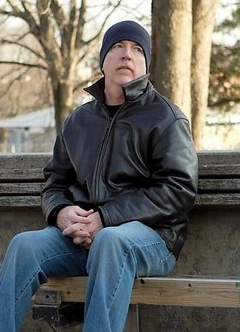
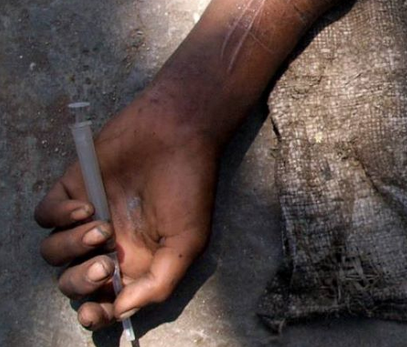


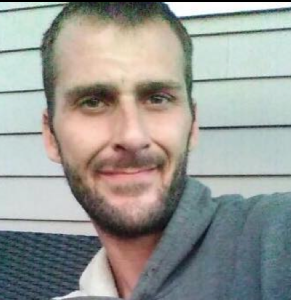 n September 6, 2015 as a result of his addiction. Shawn will be remembered as a hard worker, kind hearted, generous soul and loved by all” It’s tragic for me because I am a father of an addicted son; Shawn’s cousin and I know him. I know his father. He could be my own son and I grieve for Shawn’s dad. I just gave a big hug to him few days ago and feel his pain as if it were my own.The toll addiction takes is not waning. We all witness that current treatment policies and laws are not stopping the bleeding. Often social services workers are just earning a paycheck; hardly putting a dent in the sad rate of deaths and social carnage that persists.



 DadOnFire
YOUR COMMENTS