
 Former NBA player recounts struggle with drug addiction – CNN.com. Chris Herren, a basketball legend from Fall River, Massachusetts, realized his dreams by playing for the Celtics in the NBA, only to lose it all to addiction before rising again with a new dream. Chris wrote Basket Ball Junkie which is his memoir of his struggle with heroin and other drugs. You can read an excerpt here. The reminds me of a piece we did a while ago call the Fighter and also of the great Texas Ranger’s baseball slugger, Josh Hamiliton. The message here, is that addiction impacts more than skid row junkies and miraculous comebacks happen everyday. Recovery is more that a possibility. Link by Bill

Should taxpayers support wet houses? In AA literature, it has been said that there are those who seem to be constitutionally unable to get sober. A wet house is basically a place that allows drunks and addicts to enjoy a modicum of shelter and to drink, usually outside the premises. Typically, shelters require residents to remain sober or they are disqualified. What appears to be the ultimate in enabling is to some a less costly way of dealing with drunks. The argument being ER, jail, and crime are the alternative and cost more than sheltering a drunk or addict. Advocates of wet houses call it harm reduction. Whether America comes to terms with its chronic population of drunks and addicts is yet to be seen. Addiction doesn’t seem to be waning and it is in fact costing all of us too much money and grief.
http://www.pathwaytoprevention.org/ Teen drug addiction has a devastating effect on youth, families and communities. Teens drop out of school, the workforce or life itself. Change the course of teen drug addiction.
H ost, Larry Golbom of PAR Radio, has it out for big pharma who market addictive narcotic drugs to America. In fact, anyone who has watched the destruction addiction has had on their families, feel the same. Read OxyContin and Purdue Pharma – Diabolical Beyond Comprehension The genesis is what Larry Golbom calls the marketing of pain as a disease, which has been stunningly epidemic in his home state of Florida. Not long ago, pain was treated as an underlying symptom of a disease and the real disease was addressed. What we have now is pain as the most over treated “contrived” disease in medical history and addiction as one of the most untreated “denied” of diseases. For insight into the making of this phenomena, read this 2001 New York Times piece Pain, The Disease.
 Drug Policy Reform – Treatment Magazine Ted Jackson is the editor and publisher of Treatment Magazine, the nation’s leading trade publication covering the addiction treatment industry. Ted writes regularly denouncing the absurdity of the War on Drugs while promoting treatment as the answer to the addiction problem. This current article about reform indicates a growing call for a complete reversal of how America deals with an epidemic of drug addiction that is tearing the hearts out of our families and children while our governments and prison lobbies use the disease of addiction as a pork barrel.
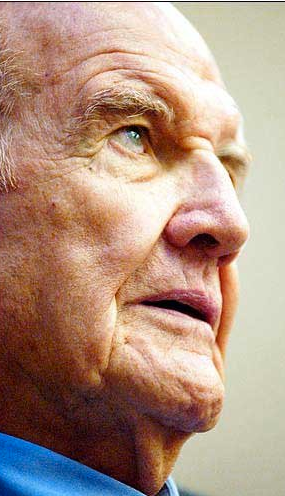 How to fight addiction at grassroot level – USATODAY.com. Even a statesman was touched by the scourge of addiction. George McGovern is on fire for solutions as he discusses a grassroots view to fighting a gripping national epidemic that took his own daughter 17 years ago. George McGovern points out that, on the federal level, not a single government agency working in this area bears the word “recovery” in its name. George McGovern is a former U.S. senator and Democratic nominee for president
Writers in Treatment
Many writers’ lives are threatened by the inability to quit alcoholic drinking, serious substance abuse, and process addictions. Too often writers and poets working alone at home, in a publisher’s cubicle, or in cabin retreat succumb to the deadly combination of isolation and addiction. Writers In Treatment helps men and women in the writing industry suffering from alcoholism, drug addiction, and other self-destructive behaviors get treatment for their disease. We produce free educational and cultural events that celebrate sobriety while reducing the stigma of addiction.
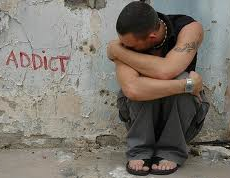 Addiction now defined as chronic brain disorder – Health – Addictions – msnbc.com. This is what we at a grassroots and professional level have been talking about. Addiction needs a medical classification so we can simply deal with it at the right scale. In a nation governed by a voting population, majority rules and the majority votes for legislators that say in many ways; let the addicts rot. Can we afford to keep looking at a medical condition in this manner? Even if 10% of the population deals directly with the impact of addiction, that’s 30 million people; addicts and their immediate family. We argue, that when you calculate prison, emergency rooms, homelessness, deaths, lost productivity the costs start to look something like a cabinet level budget. We spend hundreds of billion of dollars annually on the disease by not dealing with it; so why not accept it and deal with it humanely. It is chronic problem that doesn’t go away on its own. Msnbc link by Tom G.

Substance Abuse Treatment in the federal prison system works for the 210,000 inmates it houses. Where treatment is missing is in state prisons and local jails. Those facilities contain roughly 91% of all inmates. If we look at the Bureau of Federal Prisons we see a model that could be used in all prisons. Of the estimated 2.3 million inmates currently incarcerated in U.S. prisons, 1.9 million could benefit from alcohol and drug treatment, which could ultimately save taxpayers millions of dollars, according to a new report. Currently only 11% of inmates who need treatment are receiving it during their incarceration. Approximately 85% of current inmates could benefit from treatment, according to The National Center on Addiction and Substance Abuse (CASA) at Columbia University. The CASA report, “Behind Bars II: Substance Abuse and America’s Prison Population,” shows that 1.5 million of the estimated 2.3 million prison inmates meet the DSM IV medical criteria for substance abuse or addiction.
The unsettling trend in prescription drug abuse
seems to be an issue in the armed forces as well. Military prescriptions for pain killers is up to 3.8 million. We know soldiers are taking a toll, but consider since the invasion of Afghanistan the use of pain pills has went up four times, putting some of our troops at risk. One in four admit to abuse. While doctor are under fire for prescribing too many pain pills, military doctors are under the glass as well, in Abuse of Pain Pills by Troops. link by Mary S.
Healing a Broken System: Veterans Battling Addiction and Incarceration How many vets battle substance abuse as they cope with the aftermath of living in war zones. This is much like how drugs and alcohol impacted veterans coming back from Vietnam. Great Report. Also See Vietnam Vet Eddie Grijalva’s story.
I have always had my doubts about the broader effectiveness of drug courts. I know some programs work, but I can’t disagree with some of what Margret Dooley-Sammuli and the Drug Policy Alliance says about the larger picture.
Washington, D.C. –
At two briefings on Capitol Hill today, the Drug Policy Alliance released a groundbreaking new report, Drug Courts are Not the Answer: Toward a Health-Centered Approach to Drug Use (www.drugpolicy.org/drugcourts <http://www.drugpolicy.org/drugcourts> ), which finds that drug courts have not demonstrated cost savings, reduced incarceration, or improved public safety; leave many people worse off for trying; and have actually made the criminal justice system more punitive toward addiction – not less.
“The drug court phenomenon is, in large part, a case of good intentions being mistaken for a good idea,” said Margaret Dooley-Sammuli, deputy state director in Southern California for the Drug Policy Alliance, who contributed to the report. “Drug courts have helped many people, but they have also failed many others, focused resources on people who could be better treated outside the criminal justice system and in some cases even led to increased incarceration. As long as they focus on people whose only crime is their health condition, drug courts will be part of the problem – not the solution – created by drug war policies.”
“Even if drug courts were able to take in all 1.4 million people arrested for just drug possession each year, over 500,000 to 1 million people would be kicked out and sentenced conventionally,” Dooley-Sammuli added.
“Far from being a cure for the systemic problems of mass drug arrests and incarceration, drug courts are not even a stopgap,” said Daniel Abrahamson, Drug Policy Alliance’s Director of Legal Affairs, who also contributed to the report. “Drug courts have actually helped to increase, not decrease, the criminal justice entanglement of people who struggle with drugs and have failed to provide quality treatment. Only sentencing reform and expanded investment in health approaches to drug use will stem the flow of drug arrests and incarceration. The feel-good nature of drug courts hasn’t translated into results. U.S. drug policy must be based not on good intentions, but on robust, reliable research.”

Is Mexico’s drug war strategy working? – CNN.com. The U.S. backed Mexican drug death toll, reported by Mexican state authorities for 2011 alone, is 12,903 civilians. One U.S Citizen dies of an overdose here every 19 minutes. See U.S. deaths.
Pam Bondi on prescription drug monitoring and crackdown on overprescribing physicians – YouTube. Pam Bondi is the Florida Attorney General working at odds with Republican Governor Rick Scott who thought monitoring was an infringement on doctors rights. Go figure.
 Singer Whitney Houston apparently drowned in her bath after ingesting a cocktail of prescription sedatives. The Crime Report is a great website that collects resources concerning topics associated with criminal justice; in this case, prescription drug abuse. The website archives a range of topics including wrong doing centered around the world of drugs. Such a tragic loss!
Ex-addicts 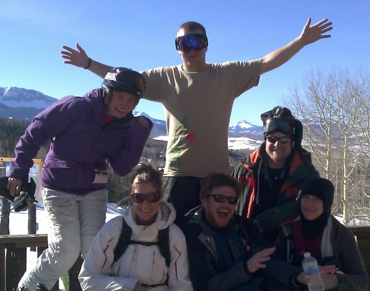 staying sober through sport – CNN.com.
Phoenix Multisport fosters a supportive, physically active community for individuals who are recovering from alcohol and substance abuse and those who choose to live a sober life. Through such pursuits as climbing, hiking, running, swimming, road and mountain biking, and other activities, we seek to help our members develop and maintain the emotional strength they need to stay sober.
 Drug Rehab a Rare Commodity in Prison. ♠ Daily Beast.
Treatment for drug addiction works better. ♠ Daily Beast.
The American Prison Nightmare. ♠ N.Y. Review of Books
Prison overcrowding. ♠ A Public Defender.com
Reports have shown that drug rehab in jail works but following some hard years, Arizona like many other states have firmed up their abandonment of rehabilitation policy for their inmates. Aside from minor pilot studies, the policy of these states is on punishment. Criminalized drug addicts, and the mentally ill are not treated according to Defense Attorney, Jason Lamm, This practice continues even though a 2009 report released by the California Department of Corrections and Rehabilitation shows a substantial reduction in recidivism for offenders completing in-prison substance abuse programs followed by community-based substance abuse treatment. To be fair some state prison do better but The Federal Bureau of Prisons does look at rehabilitation as a goal. How do we get states to follow the lead.
 As Christmas is upon us, dadonfire.net viewership is up. So isn’t the struggle for addicts, alcoholics and their families to get through the holidays. People who have seen the worst and best of themselves and their loved ones, still care to make a difference in the world of addiction and recovery. They share what they see here and elsewhere. There are those who want to see a loved one survive. There are those who want to know their own freedom from addiction. There are those who want the world to be free. That freedom is possible.
Keep sharing and logging on to dadonfire.net. Spread the word. The point is to move consciousness in America from one of prejudice towards addiction and alcoholism to that of understanding. Addiction is a deadly disease that needs a real solution. Some people who log on to this blog have lost a loved one to drugs or alcohol in body or spirit. Somehow, they are able to keep putting out a positive message that may move another person away from what they have witnessed. Recovery is possible. Never give up. Have a merry Christmas and a free and happy new year in 2012!
Alternative to prison for drug offenders. More later on this. Hot topic in Arizona that showing a little hope for the future.
NIDA Drug Facts Week – Shatter the Myth
The first thing I want to say is that when you think about NIDA, think Nora Volkow and click on her name to see who she is. NIDA ( National Institute on drug Abuse ) is best defined by Wikipedia; Ms Volkow is a phenomenal director doing important work on the scourge of drug addiction in America. On this day, October 28th, NIDA, is launching a new public outreach called SHOUT OUT!, to publicize and shatter myths about the world of drug addiction and treatment. particularly related to our young people and their parents. Drug abuse can turn into drug addiction and moms and dads need to know they are often the last ones to know. Yes, I am on fire. I have children and have known many young people who have suffered needlessly. Here are a few myths I would like to shatter during NIDA’s drug fact week:
1. Addiction is an isolated condition, of mostly meth and heroin dependence that preys on a few depraved souls and we should ignore them and hope they go away. North America is now nearing a point where 25 million citizens suffer from some identified condition of addiction to a legal or illegal substance. Addiction to dangerous illegal narcotics, meth-amphetamines and cocaine, according to most sources, affects an average of 7 million Americans on any given day. More than one and a half million addicts are in jail at the time you read this. This is anything but isolated. It impacts us all.
2. An addict can just quit because god gave us the strength and will power to do so. A few hearty souls can do it that easy! I hope your loved one is one of them. AA and NA recognizes that there are those we can not explain. Addiction is brain altering disease, often accompanied by mental illness and depression. AA and NA acknowledges; addiction is for life. Once sober, diligence is key. The doors of 12 step rooms are revolving, because an addict or alcoholic is always welcome back, unconditionally, with just a desire to stay clean for today. The ultimate path of addiction is physiological and cognitive impairment, but with good treatment, addicts can be rehabilitated. The degree of that success relies on ones basic human will to want their life back.
3. Addiction is a behavioral problem. We need to let our jails deal with it and keep it out of the health care system. For some, jail may be an answer. However, more than half of inmates are locked up for drug related crimes or possession. Locking them up doesn’t solve their problem. Many of these people are our kids! Addiction not dealt with by proper treatment, save for sheer will power, will progress to a medical condition. Our emergency rooms attest to the heavy impact from overdoses and other carnage. The cost to society of untreated addiction is astronomical if you include this cost of health care; its incarceration, related mental illness, and the costly drug war. That costs America hundreds of billions. Diverting, criminalized addicts from jail to compulsory treatment would begin to realize a better cost to success ratio and defuse the drug war focus.
4. Addiction can easily be treated by private treatment practitioners and public resources for detox and rehab. Of course, addiction can be effectively treated by a private practitioner at a cost that only very well-funded addicts can afford. Less than 5% of all addicts and alcoholics received inpatient rehabilitation in 2010. OAS.SAMHSA. If addiction were to be recognized as a medical condition, insurance and public health services would treat it. Easy right? Not so! Legislators are still working hard to punish drug use in jail and keep addiction out of the health care system. That still costs the same billions and addicts that go untreated will cause damage to themselves, their families and our communities.
5. Addiction is morally bad. Judging an addict morally is unproductive and a diversion from positive solutions. Many moms and dads have a young addict in the family and would give anything for the elusive cure. Addiction, is an ugly health care problem and society perpetuates it by hating it. Morality, as a positive human attribute, can be just as easily defined by treating addiction, much as we would treat cancer. Addiction, like a cancer has destructive symptoms. For an addict, that is cognitive impairment, deterioration, social criminality and death.
6. Addiction will not be an issue when America finally wins the Drug War and drugs are no longer available. As long the demand is there, drugs will be there. Society will demand eradication, that fills our jails with drug users and the mentally ill. Changing that is like turning around a ship in a narrow canal. A system grounded in conquering evil by destroying it, is infinitely expensive. You don’t change that; you end it. A “drug war” can’t be won when we are source of demand. Once we acknowledge that, we can begin to reduce demand by dealing with the human beings that are defined by a bondage to drug use. If America, shifts its focus to a “war on addiction”, funding will come from a transformation of purpose, and new job definitions will emerge that focus on the preservation of human lives freeing addicts from bondage to drugs.
NIDA, SAMSA, ONDCP and other public agencies who fight to show people how to stop using drugs can step to the plate to be advocates for a sober nation. Our trusted public organizations have the resources and influence to do so and it will start with legislating to address the issue. Our young disillusioned teams, will see for themselves, we have a nation that cares and if not from their own sheer will power will to enjoy the clarity of mind only sobriety can provide.
Former Mexican president: ‘US must legalise drugs to stop violence’.
As insane as it sounds, there is no other promising solution to the damage that America’s drug demand is inflicting on ourselves or Mexico. Can anyone blame Vincente Fox for his campaign against the drug war’s damage to Mexico? By January 13, 2011, 34,612 people were reported murdered in Mexico in the past four years. Look for a minute at America’s demand for the drugs that fuels this carnage. For every drug related incarceration, there are 20 substance abusers waiting for their turn in jails and hospitals. It never seems to end. More than half of our 2.4 million inmates are locked up for drug related charges. Consider that even half of them need drug rehabilitation and we are talking about 25 billion dollars that could be spent reducing deman d by treating drug addiction in stead of punishing it. Add in the cost of emergency rooms, lost workplace productivity, related homelessness and mental illness, judicial costs, and the cost of fighting demand on the streets, we are into numbers that approach a major federal government program in the hundreds of billions of dollars. Ending this carnage is not a pipe dream.
 The International Drug Policy Reform Conference The International Drug Policy Reform Conference is a biennial event that brings together people from around the world who believe that the war on drugs is doing more harm than good. It brings together over 1,000 attendees representing 30 different countries. Mark your calendar and be there on November 2-5, 2011 at the Westin Bonaventure, Los Angeles, CA. REGISTER HERE.
Teenage Addiction Epi demic Documentary to air October 12, 2011 on PBS-KVIE
The primary mission of Pathway to Prevention is the prevention and early intervention of teenage drug and alcohol addiction. A secondary goal of Pathway to Prevention is to help fund rehabilitation. View the trailer
 Life-Saving Drug Out of Reach – NYTimes.com. “Overdose now kills more people in the United States than car accidents, making it the leading cause of injury-related mortality according to the latest statistics from the Centers for Disease Control and Prevention. The number of deaths — 37,485 in 2009 — could be cut dramatically if Naloxone were available over-the-counter and placed in every first aid kit.” View the rest of Maia Szalavitz’s story on the use of Naloxone, by click on the image or title of this article.
 Drug and Alcohol Rehabilitation : Drug Rehabs for Addiction Help. Rehab Programs Inc. is a community service provider with an objective of finding the right rehab program for those suffering from drug and alcohol addictions. With over 20 years in the substance abuse field, we understand the needs of people and their families.
 DadOnFire
YOUR COMMENTS