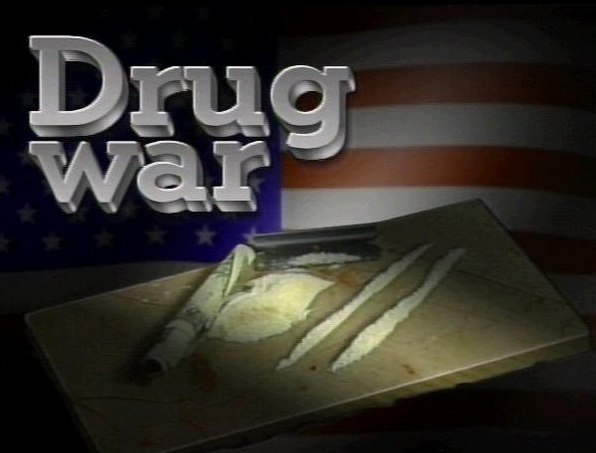
America’s efforts to reduce illegal drug traffic is not reaping big benefits.  It is chewing up 20% of U.S. spending.  Here is one idea that for some reform that can turn this around.   Its text  from a letter I sent to the Drug Policy Alliance who is pushing support for Senator Webb’s work.

“A big part of my concern is a costly prison system, where SUD/MH (Substance use disorder/ mental health) gets little or no address, which with screening could be a good place to start treatment for jail bound addicts.  Here’s what I see.

  • Proactive judicial and prison systems that screens offenders and inmates for SUD/MH treatment diversion.
  • Re-classification and/or dismissal of non-violent petty crimes stemming from SUD/MH, based on the success of treatment and victim restitution.
  • Re-classification of narcotic drug “use” related offenses to a civil status and a re-designation of marijuana “use” to civil or a “no offense” status.
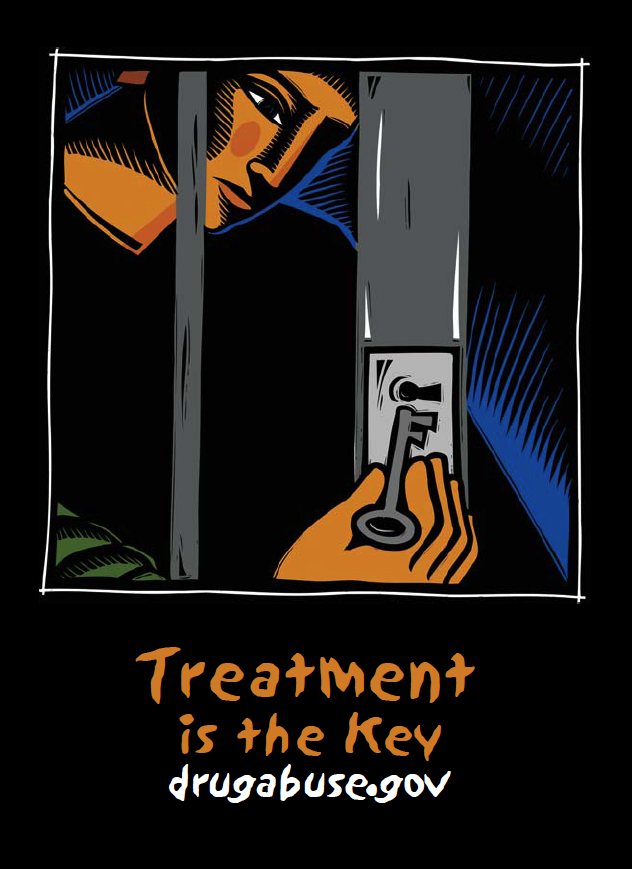
  • Public funding and treatment of SUD/MH outside the prison system based on a sliding scale of client financial contribution and/or contributing service.

Broad reform has a realistic possibility of showing how cost is assimilated.  Regarding drug and alcohol abuse, N.I.D.A. estimates 480B is already spent on incarceration, judicial work, demand reduction and general societal damage.  A 1/3 of that goes directly to prisons.  These expenditures are firmly entrenched in federal and local penal budgets.  If a third of inmates are SUD/MH identified by screening, then that part of the job has begun.  We have them.  We keep them. We treat them.  If we don’t, we know they will be back to impact to the system.  The cost doesn’t go away. This is also known as the revolving door.

If the same energy spent criminalizing addiction is transformed into treatment, funding is already there!  The more we de-criminalize and treat, the less need for incarceration. This reduces demand for an illegal drug market.  The message needs to go to the ears of lawmakers from voices from American’s impacted by the scourge of addiction”  dadonfire

A lot of parents and families of alcoholics and addicts are patiently waiting for a mandate on SUD/MH  (Substance use disorder/ mental health) treatment coming out of health care reform.  After today’s election victory of Scott Brown it looks like the senate health bill may be in for some re-constructive surgery.  I guess it is time to quit holding my breath for Health Net Insurance to cover SUD/MH in this family.  Recovery is a tough row to hoe and it looks like we may have to plow through a lot more  hard pan and black clay for some time to come.  The American Society of Addiction Medicine did make a comparison of addiction issues in the hotly debated health reform bill.  Here it is  →  January 5th , 2010 side by side comparison. All I can say is that America deserves this.

Casey Johnson daughter of Billionaire “Woody” Johnson  (Robert Wood Johnson IV) found days after her death from possible drug related causes @ age 30 in her apartment.  Casey has a history of drug problemsPrescription Addiction Radio’s  January 10th radio show talks about drugs as a possible cause of death and ironically, a major Johnson family charity, The Partnership for a Drug Free America who may not be doing enough.  Woody  is owner of the New York Jets.  His father, Robert Wood Johnson III founded the Robert Wood Johnson Foundation and was CEO of the family company  Johnson and Johnson Drug Company who has marketed the recalled, opiate based  duragesic patch. The Robert Wood Johnson’s Foundation is also known for working to find solutions to problems with drug use in America.

This is the time for change.  An opportunity to expand treatment and recovery options.  The ONDCP will complete their strategies this year and Webb’s National Criminal Justice Commission Act of 2009 is coming to a head at the end of 2010.  Here are Webb’s main points:  The USA has 5% of the world’s population and houses 25% of all prisoners  •  Incarcerated drug offenders grew 1200% since 1980  •   Four times as many mentally ill people are in prisons than in mental health hospitals  •  A million gang members and drug cartels operate in 230+ communities across the country  •  Post-incarceration re-entry programs are haphazard and often nonexistent, undermining public safety and making it extremely difficult for ex-offenders to become full, contributing members of society.   READ A FACT SHEET ON THE BILL HERE

Community input on the bullet points in this fact sheet are critical.  We can look at addiction and mental impairment screening of new offenders and inmates with immediate diversion of addicts to venues of compulsory treatment.  Costs can be covered by the same funds we already waste.  We can look at re-categorizing criminal charges based on successful diversion of  non violent offenders.  Right now, diversion options for drug addicted offenders to treatment misses most addicts because of their crime category.  When jailed, untreated addicts are released and continue to use.  This is the revolving door of jails and drugs.  We can also expand and fund drug courts.   Addicts not yet criminalized could have the threat of jail removed by de-criminalization of drug use, accessible treatment, alternative replacement drugs, safe detoxification with follow-up post acute withdrawal treatment and so on.  We can’t ask to legalize street narcotics, but we can  own the reality of the horrific impact drugs and trafficking has on us and reduce demand and jail populations at the same time.

In order to make an impact that helps young addicts and families, reduces drug demand, and better spends tax dollars, we need to impact law makers at all levels.  Maybe our elected officials don’t listen to activists but an America full of families affected by the scourge of addiction can convince their lawmakers.  Thanks to Senator Jim Webb for getting the ball rolling.   Lets help him.

Informative  global website on subjects including drugs   →  LOVE TO KNOW DEA traveling  exhibit, your tax dollars at work →   TARGET AMERICA

“The pain and suffering of addiction is not limited to the alcoholic or drug addict. Family members share a tremendous burden as well”  – Ed Hughes, MPS   Read his guide list:  10 Ways Family Members Can Help a Loved One With a Drug of Alcohol Problem Book by Ed Hughs and Ronald Turner.

China Executes UK Drug Smuggler.  Source: Al Jazeera and agencies:  China has executed a British man.   The execution of Akmal Shaikh by lethal injection on Tuesday morning followed last minute appeals for clemency from his family and  UK officials. (U.S. penalties)  Links by Mary S.

Interesting article posted at,  RECOVERY HELPDESK bringing attention to the seriousness of detoxing off opiates while in jail and a wrongful death lawsuit.

This May 2009 report highlighted by the organization Join Together spells out taxpayer burdens in Shoveling Up: The Impact of Substance Abuse on Federal, State and Local Budgets.  Post provided by Mary S.

Dadonfire recently editorialized  Drug Czar Kerlikowske’s October Address to America’s  law enforcement leaders.   We viewed his speech as continued support for a failed drug war.  Our counterpoint  was punctuated Monday, Nov. 1st  by news that one million Mexicans are working in the drug trade to supply our eight million addicts.   That’s an industry 4 times larger than General Motors.  This doesn’t speak of a winnable war.   On Oct. 29th, the LA Times published a great piece called Mexico Under Siege. You can also download a 2008 PDF file:  Mexico’s Drug Cartels to see the same information presented to your congress.    Links by Mary Slivinski

Drug war politics emerged after Vietnam and it wasn’t just about legalization.  Dadonfire has been looking at addiction and treatment, personal experiences and access to recovery.  We support decriminalization and a shifting of America’s focus on this problem from being silent to creating solutions.  A new paradigm.  Viewers know that for better or worse, the  atmosphere of decriminalization parallels the legalization effort.  Dadonfire’s  interest is decriminalization and access to recovery.  Legalization is whole other focus sometimes synonymous with the anti-drug war lobby.  That is beyond the scope and interest of this website. We do watch some of this work and share  information emerging out of the anti-drug war effort for the benefit of viewers.  Stopthedrugwar.org chronicles  events of 2009 in a piece worth reviewing.   Others sites that  focus on drug war politics and reform are:

Drug Policy Alliance •   NORML •   Drug Truth Network •    Law Enforcement Against Prohibition •    The New American Drug War •       Drug War Facts

You be the judge.  Dadonfire views all sides of the issue in an effort understand all vantage points and to postulate what possibilities will emerge that can significantly impact the access to treatment of drug addiction.  Links by Mary S.

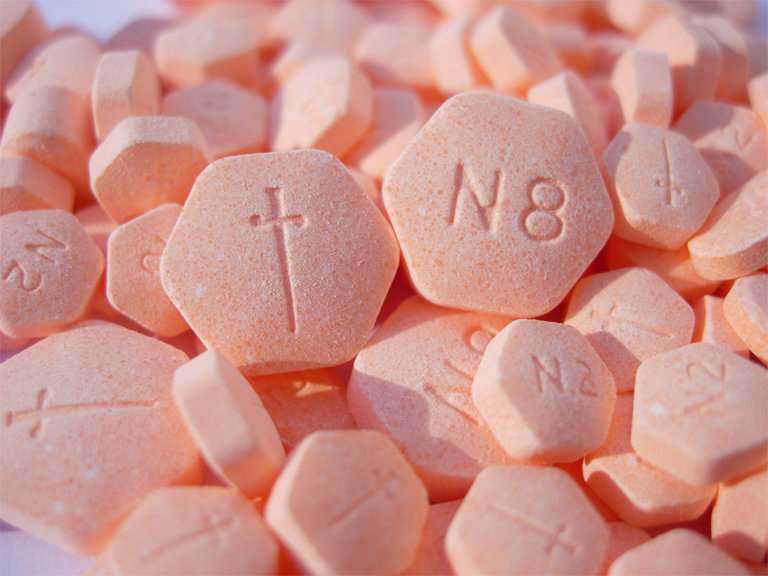
Replacement Drug Therapy attracts a debate between the medical and moral definition of addiction.  Is this a question of medical necessity or one’s will.  Medical research is breaking down why heroin in particular is so hard to lay down for some.  Alcohol is a progressive disease.  Peak opiate addiction happens fast and it is brutal.  I spoke with Keith a 28 year old recovering addict.  He sees two truths in the debate.  Clean, after 5 years of opiate addiction he talks about his 3 year replacement drug therapy to date.  “I am an addict and alcoholic.  I work the AA program. I have service commitments in AA and some in NA.  I also have been on Subutex for 3 years.  It works good for me if I apply recovery principals and work AA.  I am an alcoholic at heart but when I found opiates, I was off to the races” Keith say’s opiate addiction is far worst than people imagine and takes determination just to work the program he is on now.  Addiction for him is very much a medical condition.  He has explained that quitting opiates after long term use for many young addicts is near impossible and the leap to replacement drug therapy still takes iron clad determination, explaining further.  “Suboxone or Subutex (subs) work for some and not for others.  Subs make you feel normal.   There is no post acute withdrawal (PAWS).  You feel as you did before you started using; normal”…Here is the problem with many… “Most on subs do not fix what is really broken because they perceive that nothing is broken and don’t use the subs correctly”… “Some take sub “vacations” and use opiates off and on”.  This explains why so many young opiate addicts do not recover and continually relapse, even when using subs or methadone.  Keith holds on to the premise that he would would prefer the initial week of heavy physical withdrawal than the many months of the post acute phase.  For him, subs built his bridge to sobriety.

The Drug Czar is  listening.  “These latest data confirm that we must redouble our efforts to implement a comprehensive, evidence-based approach to preventing and treating drug use,” Gil Kerlikowske, Director, ONDCP. He is talking about a new survey showing kids using a little less methamphetamine and binge alcohol, more pot, and more ADHD type drugs.  Survey shows kids using more opiate based  prescription pain killers which can lead to cheaper heroin use, which is also risingRead Dave Goodman’s piece about the survey. Read “Kids and Drugs” for solutions.  Survey link by John B.

Check out NY Times, Dec. 7th, 2009,  Addiction on Two Fronts; Work and Home. …”His son had been dead from an overdose only three months when A. Thomas McLellan, among the nation’s leading researchers on addiction, got a call from the office of Vice President Joseph R. Biden Jr. …” (excerpt). Deputy director McLellan of ONDCP, Office of National Drug Control Policy,  knows addiction from all angles and advocates re-directing  resources   from  demand reduction efforts not reaping big gains to prevention and treatment.  The latest figures from his office estimate 25 million alcoholics and addicts, comprising about 8% of the population.  Less than 1 in 10 of these receive treatment.  The ONDCP office’s immediate goal is to triple that number.  Look for an upcoming February 2010, drug policy strategy statement.     Link from Jon R.

The cost to communities for not addressing addiction has never been fully quantified.  A single addict or alcoholic  has the potential to destroy families, communities and lives.   Read,  “Just One Addict!, Breaking the Back of a Los Angeles Budget”, to understand the magnitude of impact.  Also check out the article, “The Prison System Falls Short in Treating Drug Addiction” for a look at why it may be better to treat addicts while we have them in our hands.

As if substance addiction is not a big enough problem.  Enter; an underlying mental illness.  These are the dually diagnosed drug and alcohol addicts.  Kathleen Sciacca founder of MIDAA, Mental Illness, Drug Addiction and Alcoholism tackles the issue head on from a perspective of treatment.  Here is what she says:   “People who have multiple disorders of severe mental illness, drug addiction and alcoholism “dual diagnosis” have the same severity of addictive disorders as do people who have addictive disorders alone.  They also experience exacerbation of both their mental illness and their addictive disorder due to interaction effects. Their families experience the disruptions evoked by addictive disorders alone.  This is in addition to the stress of coping with a serious mental illness.”  Sounds like the ingredients for hell on earth.   View the Dual Diagnosis Website here for further information on the impact of addiction and mental illness.  Also view the PDF files of the World Health Report:  Investing in Mental Health and Kathleen’s Sciacca’s PDF file of her Fact Sheet on Dual Diagnosis. Links by Mary Slivinski.

A cool morning conversation with a case worker outside of C.O.P.E’s  downtown  treatment facility in Tucson this morning led to some interesting questions.  We’re talking about the world of addiction and recovery.   The National Institute of Drug Abuse (NIDA)  and the Robert Wood Johnson Foundation RWJF, took part in an HBO film series about addiction that can shed some insight.  There are 8 million narcotic, cocaine and methamphetamine addicts on the streets of America at any given time and as a totality of all drug and alcohol addiction that figure soars to 23 million people struggling as we speak.  That’s  an alarming world of dysfunction and suffering.  Of these individuals, fewer than 10% are receiving effective treatment.  These figures come from NIDA and RWJF.

C.O.P.E. has earned exceptional credit in helping those who arrive at their door step.  To ask about the majority that don’t make it is another story.  The easy answer lies solely with the addict.  When they are  ready; they show up.  What about those 20 or so million addicts and alcoholics not receiving treatment and the impact that has on families and communities.   That’s the intimidating reality that poses the hard question.  Realizing the patches on our  recovery boats are not holding is a scary thought.  The seas of addiction  are rough.  America needs a new fleet of sea worthy recovery vessels.  What that will take is a 21st century question pointing to new paradigms that we haven’t invented yet.  The impact is real.  The needs are real.  America is worth every ounce of effort.

This website, Meth Free Alliance,  is a grassroots effort that was created right here in Tucson Arizona.  The downloadable PDF format companion booklet, Tucson Meth Resource Guide is a powerhouse of information and treatment destination in the Tucson Area.   A U.S. Government level effort which works in concert with local efforts is also a great resource at www.methresources.gov.

Web browsing through the myriad of information on addiction,  education and prevention efforts lead to four more blogs definitely worth your visit

G.O.A.L , Global Outreach For Addiction Leadership •   Pill Talk, an Entertaining Pharmacy Blog •   Why Do I do What I Don’t Want to Do?, Relapse Coaching and Prevention •   Swallow, The Blog of Record on The  Painkiller Epidimic

Richard Farrell posts a searing piece warning of growing heroin use by young people all around us; a modern day Trojan horse, threatening our very sanity as a nation.  Read this post here.

Mexico’s Drug War? or America’s drug war?  Earlier this year, Anderson Cooper did this CBS 60 Minutes piece that is worth re-visiting.  It hammers on just how critical this issue has become.  Tucson, Arizona’s  Charles Bowden spoke in a video production back in September called Mexico’s Dirty War Against Drugs, in which he claims that from the drug cartel’s  point of view, drugs are the largest industry in Mexico.  The point is that this.  The drug war for all the rhetoric it produces from both side of the prohibition and anti-prohibition debate;  is a real issue with real consequences that keep America from standing up to drug addiction.  Americans are the  deer in the headlights of Mexico’s drug war.   As the old saying goes.  You can’t fix anything unless you know what’s broken.  Addiction is ugly and so is market that satisfies its craving, not the least the low level lust Americans have for alcohol and drugs in general from  prescription pain killers to pot.    Links provided by B. Ford and M. Slivinski.

Veterans: Drug Addiction and Treatment.  The Veterans Administration for many of its faults is the best model we have for public health care and taking care of millions of soldiers, yet their policy for drug and alcohol treatment is under scrutiny in this recent 11/04/09  research brief  called:  Healing a Broken System: Veterans Battling Addiction and Incarceration.  The focus is on opiate addiction and  point is that adequate and effective opiate recovery is elusive for veterans.  The outcome for these addicts  is too often; still jail.  The National Association of Drug Court Professionals (NADCP) also supports many of the  points made in this paper.  Heroin was a scourge for veterans coming back from Vietnam.  See Eddie Grijalva’s story.  Today, Opiates have made a big comeback, largely encouraged by the rampant mis-use of opiate based prescription drugs.

Prescription Addiction Radio is a website that hammers on what high percentage of opiate addiction really stems from.  That is prescription pain medication grossly over-marketed and abused in America, impacting people in all walks of life.  I won’t describe the reasons for saying this, because this website does it very well.  I am, however, amazed after listening to the audio files that it contains.  It is a real ear opener and well worth anyone’s time who is interested in understanding why America is impacted so heavily by addiction.  You can also view a nationwide online petition to ban oxycontin in this link.

Eddie Grijalva  is a compassionate leader in the world of recovery.  His fire for finding solutions happens everyday in Tucson, Arizona and throughout Native American Communities in Southern Arizona.  His work is a model among other American Indian tribes across the country.   As a Compass Behavioral Health Service staff member and recovery specialist he has walked and talked as a leader among many.  His story was featured in the recovery blog,  Addiction World.  It can be viewed right here:  Eddie Grijalva’s Story

“…successful recovery starts with giving people a second chance, withholding judgment and offering compassion. “It’s about honoring people… ” – Eddie Grijalva

For those who weren’t able to attend the International Drug Policy Reform Conference or were interested in it what was happening there;  you can click here to view  Ethan Nadelmann’s opening speech link by Mary Slivinski

Actually this blog is called:  Highs Lows Crack.  A UK mother fed up to her eyeballs about the scourge of addiction, writes a poignant pissed off piece called:  Baby to Bastard in 32 Years.  Surely many parents will relate to this and many other truth-isms in this blog; coming to terms to the reality of tough love and saving the hair follicles.    Have a  story or an interesting blog you want to share; send it to DadonFire Submissions

OOPS:  HOW CASUAL DRUG USE LEADS TO ADDICTION, By Alan I. Leshner, Ph.D., Director, National Institute of Drug Abuse (NIDA), National Institutes of Health

“This unexpected consequence of drug use is what I have come to call the oops phenomenon. Why oops? Because the harmful outcome is in no way intentional. Just as no one starts out to have lung cancer when they smoke, or no one starts out to have clogged arteries when they eat fried foods which in turn usually cause heart attacks, no one starts out to become a drug addict when they use drugs. But in each case, though no one meant to behave in a way that would lead to tragic health consequences, that is what happened just the same, because of the inexorable, and undetected, destructive biochemical processes at work”  Read the rest of the article here….and what to do when your hooked?  Check out this excellent PDF file of a document produced by NIDA called.  The Principals of Drug Addiction Treatment. Links by Mary Slivinski.

Anyone that knows a junkie or parent(s) of a junkie;  know the insanity of dealing with chronic irrationality.   Smack Time by Matt Harvey gets into the trenches.  The Drug war has failed and beckons  a  restructuring of drug laws in “Face the Facts; End the Drug War” by Johann Hari.  In this last piece entitled : Will the US step up on drug treatment. David Crary of the Assoc. Press examines unmet needs,  destroying people in ways you can’t image unless you’re  there.  This should  be a national priorty.  Links by Mary Slivinski.

Andre Agassi reveals Meth Use This just goes to show that drug use is widespread.  As part of an autobiography, Agassi talks about using methamphetamine in the mid to late 90’s after earning over 30 million dollars.  A French Newspaper article – Agence France-Presse  11/10/09 –  calls for returning his winnings.   An ESPN video segment,  First Take Update,   features a sharp discussion of Agassi’s drug use.  Lets see if Agassi follows up with some groundbreaking crusade to reduce meth use.   Links by Mary Slivinski.

As any addict or an addict’s family member knows, treating a difficult methamphetamine  addiction  is a tough undertaking.  A reader asked about treatment and this article is one to look over:  Methamphetamine Addiction.  You can also down load an in depth guide to treatment of meth addiction in:  Meth Treatment Guide. Dadonfire has also published some educational links such as this piece in Frontline called the Meth Epidemic and a powerful video series called Meth Inside Out, which covers every angle of meth including treatment.  Closer to home, we all know how hard it is to find affordable treatment.  This website – usenodrugs.com –  is the most useful site we found for finding out whats available in major US cities listing treatment locations in every range of cost.

your views so far!

  • 119,726 site visits

CHECK OUT PAST POSTS HERE >

YOUR COMMENTS

Archive by Month

Calendar

March 2026
M T W T F S S
 1
2345678
9101112131415
16171819202122
23242526272829
3031