Recovery Month 2011 – Get Involved.   SAMHSA has been sponsoring National Recovery Month, every September.  The intention is to promote the societal benefits of treatment for substance use and mental disorders, celebrates people in recovery, lauds the contributions of treatment providers, and promotes the message that recovery in all its forms is possible.  It is a worthwhile investment, since addictions is such an intertwined affliction to the American People.  An practicing addict will drag down many others.  Alcohol, methamphetamine, and many pill addictions that lead to heroin, etc.. are all drugs that suck in so much of Americas resources.    Link by Mary S.


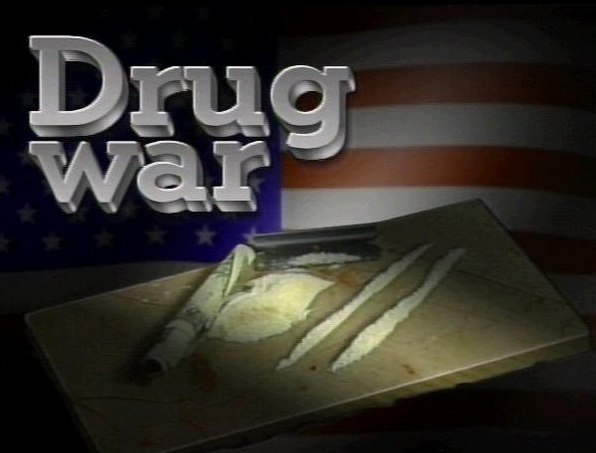
Meth Inc.: Industrial-scale Mexican labs now pushing top-grade poison our way is a piece published a few weeks ago by the Arizona Daily Star, that talks about corporate meth;  The new meth source.  Yes, Americas drug war managed to push  local meth production into Mexico.  The demand never went away.  This is the legacy of our war on drugs; pouring gasoline on a fire.  The more you try and kill it, the bigger it gets.    Just north of the U.S.-MEXICO border, Arizona  is No. 1 in the nation for high school methamphetamine use, according to the Centers for Disease Control and Prevention.  Rural areas in Arizona and other states tend to be hit even harder and the drug is easy to get from Mexico.   One meth hot spot, Central Valley, California, is home to some of the most impoverished rural towns in America, where crystal meth addiction is prolific.  In Fresno, Louis Theroux finds a community ravaged by this cheap and highly addictive drug in his documentary, The City addicted to Crystal Meth    Meth is just one drug that is tearing apart our country.

Fighting America’s craving for drugs is not easy.  Crystal Darkness is one small campaign to end the madness.  You can view their website:  CRYSTAL DARKNESS.  Their  mission, however, clear is dwarfed by the immensity of the problem in America.  Now with the economy in shambles, where will  young addicts turn?…State funded rehab?   It’s clear that an entire reversal of what we have been doing for the last 40 years has to take place.  Emphasis has to be on recovery and saving our youth.  Drug addiction has to be given legitimacy as a disease that devours our young like a rouge cancer.  Killing it is not working.  It needs to enter the realm of medical science.  We are better than this.

Robbie Gennet: End the Drug War by Rescheduling All Drugs
The $320 billion annual global drug industry now accounts for 1 percent of all commerce on the planet. The war on drugs is a failure. All that taxpayer money spent with no real impact on lowering taxpayer consumption. Yet simply adjusting the methodology and basis of our drug scheduling could change it all, using a new set of standards based on empirical data and facts, not misleading rhetoric propping up the status quo.  link by Mary

World Drug Report 2011

Many illicit drug markets have reached global dimensions and require control strategies on a comparable scale. In that context, there is a need to better understand these transnational markets and the manner in which they operate. The yearly World Drug Report is a contribution towards that objective.

Drug Decriminalization in Portugal: Lessons for Creating Fair and Successful Drug Policies | Glenn Greenwald | Cato Institute: White Paper.

Notably, decriminalization has become increasingly popular in Portugal since 2001. Except for some far-right politicians, very few domestic political factions are agitating for a repeal of the 2001 law. And while there is a widespread perception that bureaucratic changes need to be made to Portugal’s decriminalization framework to make it more efficient and effective, there is no real debate about whether drugs should once again be criminalized.

CASAColumbia.org: News Room: New CASA Report Finds Adolescent Substance Use at Epidemic Levels.

The study looks at how American culture increases the risk that teens will use addictive substances and how the messages sent by adults, and glamorized by the tobacco and alcohol industries and the media, normalize substance use and undermine the health and futures of our teens.

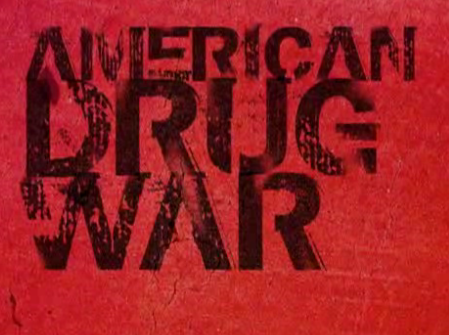
Probably one of the best videos;  America’s Disastrous Drug War,  produced by Walter Cronkite was removed from all you-tube archives.  Go Figure!  One Cronkite  video that survived is called Harm Reduction BUT!!!, Many informative videos on the drug war are still out there and readily available to illustrate maybe,  the costliest problem America faces.  Here are a few notable video producers and interviews on the subject:  Neil FranklinFrontline,  Robert Capecchi ,  a 12 minute clip from a great 2007 series from Kevin Booth’s, The American Drug War.   Check out the rest of Kevin’s  series on TagTélé and  you-tube.

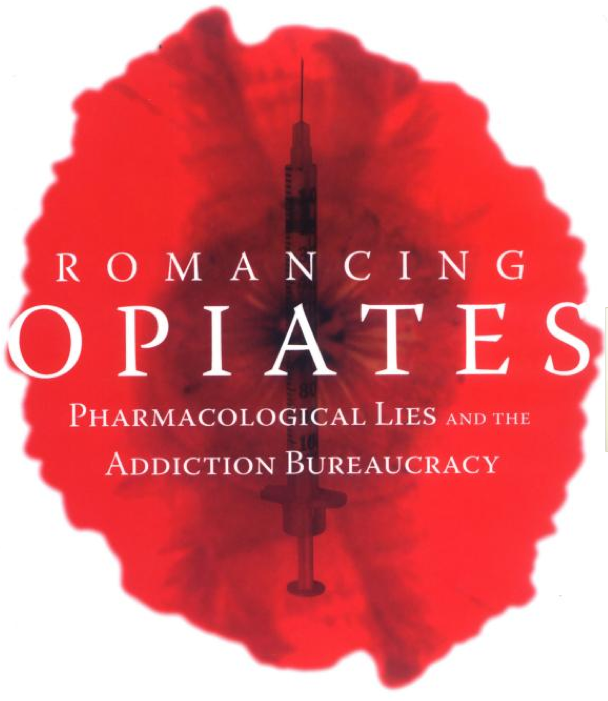
Romancing Opiates,  a controversial book on opiate addiction was written by social critic, retired doctor and highly acclaimed author Theodore Dalrymple, many call the Orwell of our time.  He has written extensively for the City Journal, Manhattan Institute; a social journal worth viewing.  His 2006 book, Romancing Opiates treats addiction and treatment much in line with his social commentary on failed states and systems.  Most of his writing follows an Orwellian ideology.  Curiously,  in his book about opiate use, he compliments Mao Tse Tung’s methods of eradicating  opium and heroin use in China with extreme coercion or death.  You can read the rest of this review right HERE

We are talking about the origin of drug addiction and knocking on deaths door all the way down this dangerous road.  Kids flirt with cheap highs as young as 9.   Often something is missing at home and the choices a kid makes paves the way to drug and alcohol abuse.  Years can pass while parents miss or deny the signs of drug abuse.  Inhalants ranging from a simple “dust off” computer cleaner to a wide range of aerosol, glue and fuel huffing is a common start.   Websites promote parental involvement as the deterrent.  See The National Inhalant Prevention CoalitionDrug and Alcohol Scene and Parents: The Anti Drug.  This is all great!  Talk to your kids! …while you still can.   Kids that don’t get the right attention  probably don’t have two fully conscious parents working together.  Even if we are half conscious to the fact, kids find ways to get high.   The medicine cabinet is another source of opportunity.  Many don’t realize that addiction to street opiates starts with the abuse of legal opiate based drugs.  Keep  prescriptions secure and monitor the pain medication a doctor prescribes for your kids injury.  Statistics indicate that in 2009, 8 million serious drug addicts, whom were kids have slipped through the cracks.  Some are still kids.  We still deal with them.  Our communities deal with them.  By then its tough love.  If that doesn’t work, the tough love they will get on the streets is brutal.  Dadonfire supports a world of recovery.  links by M. Slivinski.

It is easy to have high expectations for a teen coming home from some kind of treatment for their addiction, but what they need to know, is how important they are to their recovery — that failure is not the end and success is up to them.  Substance use disorder creates stress for a family and there is no guarantee of the outcome of recovery without diligence. You know who your teen is.  What comes after treatment is more work.  Finding ways to deal with it are critical.  There are resources everywhere and the web is a good place to start, even to find a meeting.  There are also, ways for the whole family to just “be” that enhances the success of a teen’s recovery.  To see a 9 point list of what I recommend for a family welcoming home an addicted loved one,   CLICK HERE.

Moms United to End the War on Drugs & Students for Sensible Drug Policy

Rally & Vigil   Join us to call attention to the devastation of the war on drugs and prohibition @ Chuco’s Justice Center, 1137 E. Rodondo Blvd., Inglewoood, CA,  June 18, 2011 – all day – starting  @  1 pm

A New PATH /Los Angeles is co-sponsoring with SSDP an all day festival SATURDAY JUNE 18TH; collaborating with 27 other drug war activist and advocacy groups to present 2 panels of speakers, poetry readings, candlelight vigil – ending the evening with live music till midnight! For more information

PLEASE VISIT THIS WEBSITE LINK

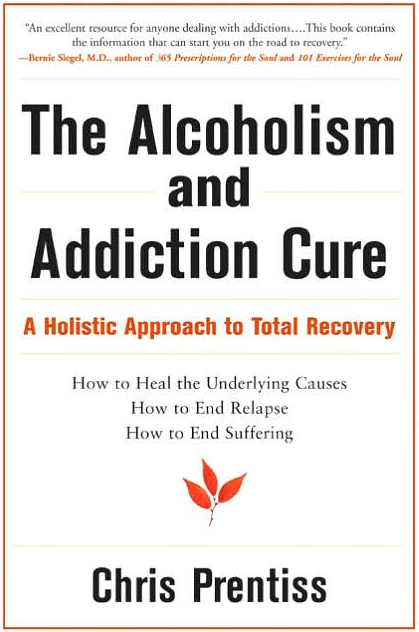
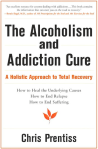
THE ALCOHOLISM AND ADDICTION CURE: a book with a claim to cure addiction.  Most have seen the ad’s.  It sparked my curiosity.    Heroin addiction is the genesis of Chris Prentiss’s book and his claim to cure addiction.  His son, Pax Prentiss was a 10 year heroin user among other drugs, including alcohol.  Pax conquered a larger than life complex about his dad by co-founding Passages Treatment Center with him.   http://www.dadonfire.net is not sold on a simplistic cure.  I do like the four points.   Here are some links for your own review:    Hollywood Rehab •   Breakthrough Addiction Recovery •   Addiction Tomorrow. “Curing addiction” at Passages is reduced to four  problems  in an addict’s life:  1) Chemical imbalance,   2)  Events of the past,  3) Current conditions and  4) Things we believe that are false; biggest being that addiction is a disease and “I” have it. (Of course this flies in the face of AA and NA.)

If you believe that addiction is not a disease; but it is “something” that is curable, read this book.  Addressing the four points will take a lot of cash.  Passage’s, Malibu,  is $78,560 per month.  A scaled down Passages, Ventura is $32,500 per month.  That includes daily work of nine therapists and doctors  a plethora of phlebotomy according to Judith @ Passages Admissions (805) 283-4737.  Those costs are based on Jan. 2010 pricing.

“The cure” is a commodity.  Life energy, you might say.   But, isn’t that personal effort no different that what has been known for the last 54 years since alcoholism and  drug addiction to follow, were defined as disease by the AMA.   It takes work whether done in 30 years or 30 days.  As far as “a cure”, I wouldn’t bet much money on a “cured” addiction left un-checked after a single month of treatment.     Addiction recovery, however one minces words, be it a  cure or recovery,  takes living in vigilance for an addict.  Most can’t afford luxury treatment, but probably wouldn’t argue the impact  of personal and public cost of  addiction.  It is  a financial burden to all of us and big dollar treatment doesn’t  pick bones about this reality.  A “cured addict” is another story.

South Florida has achieved a reputation of becoming a haven for pill farms and the proliferation of illegal pain medication.  Pressure to enact new laws has finally led to monitoring and limitation of prescriptions, which dampened the availability of addictive drugs from Florida pill mills.    October 1st, 2010, was a milestone as some pain clinics simply closed, leaving addicts looking for other sources. A lot of people were panicking… I was getting a lot of calls from people trying to figure out how to stay alive,” said Bernard Cassidy, a Fort Lauderdale attorney who represents pain clinics. Some pill mill operators were charged with illegal dispensing of pain medication.  There are thousands of Americans still  addicted to pain medication, affecting women, the elderly and teens.   Teens are especially vulnerable as Mary Bono Mack talks about the issue, using her son as an example.  Women are another vulnerable group as explained in Women and Prescription Drug Addiction. Prescription drug addiction is a growing American problem.  Links by JJ

St. Francis Mission Recovery Programs…Can you imagine driving more than 90 miles to get to your weekly meeting?  What if you wanted to go to more than one a week but couldn’t because it was either too far away or you didn’t have adequate transportation? What would you do, and more importantly, who would you turn to?  These issues, sadly, are run of the mill problems for those recovering from alcoholism and addiction on the Rosebud Indian Reservation in South Dakota.  The reservation is home to the Lakota (Sioux Indian) people, many of whom suffer from the problems mentioned above.  Two recovery centers – the Icimani Ya Waste Recovery Center and White River Recovery Center – are working to help those who suffer from addiction on the Rosebud Reservation.  The centers are run by members of the Lakota tribe / the St. Francis Mission (link: http://www.sfmission.org/programs/recovery/).  They help coordinate 12 step meetings for those in need, provide space for those meetings to take place, give referrals to treatment centers and support for the families of those suffering from addiction.  In talking to the coordinators to the two recovery centers, it is clear that the need for recover is strong on the reservation.  Jim Stands, director of the White River Recovery Center, states, the people on the Reservation are affected by the disease of addiction.  Whole families – from great grandchildren to great grandparents – are affected, and in turn, addiction affected the community and the whole Lakota nation (called the oyate).  When an individual wants to overcome their addiction, they face challenges that are above and beyond what someone who lives off a Reservation might face.  One of the open AA groups that meets on Wednesdays at the White River Recovery Center is called the “Out of Towners” meeting for a reason.  Many of the individuals who attend this group live far away from where the meeting is held, but make the long drive every week to support each other in sobriety.  The St. Francis Mission and the Recovery Centers have partnered with the Betty Ford Institute to provide educational programing to address the effects addiction has on the family.  Participants of the Betty Ford Family Program learn to set boundaries, control codependency issues, and communication skills so they can express emotions and feelings in a healthy constructive way.  The recovery programs combine Lakota traditions with more traditional recovery content.   by Corrie Oberdin  corrie@corrieoberdin.net   http://www.sfmission.org

Portugal’s Drug Policies pay off, US eyes lessons.   12/26/2010

Drugs in Portugal are still illegal. But here’s what Portugal did: It changed the law so that users are sent to counseling and sometimes treatment instead of criminal courts and prison. The switch from drugs as a criminal issue to a public health one was aimed at preventing users from going underground.  Portugal with an estimated 100,000 people — an astonishing 1 percent of its population — were addicted to illegal drugs. So, like anyone with little to lose, the Portuguese took a risky leap: They decriminalized the use of all drugs in a groundbreaking law in 2000.  Now, the United States, which has waged a 40-year, $1 trillion war on drugs, is looking for answers in tiny Portugal, which is reaping the benefits of what once looked like a dangerous gamble. White House drug czar Gil Kerlikowske visited Portugal in September to learn about its drug reforms, and other countries — including Norway, Denmark, Australia and Peru — have taken interest, too.  Post by Mary.

I believe: an inspirational video by Timothy Shoemaker.  Click Here

As Mexico counts 35,000 deaths resulting directly from the drug war that President Felipe Calderon initiated in 2006, Former Mexican President Vicente Fox among others,  argues for legalization to stop the carnage.  Meanwhile, here in the U.S., it seems pointless to incarcerate users of pot and other drugs, while at the same time fueling the drug trade coming in from Mexico.  Everyone seems to lose except the DEA and the Prison Lobby.  What would happen if much of that enforcement effort went into rehab and recovery.  That would be a good counterpoint to what Mexico is thinking about.  Even if  sanctions remained in the U.S. for drug trafficking, we could help millions of Americans, simply with the  decriminalization of use, diverting that savings to rehab.   Portugal embarked on just such an experiment more than a decade ago.  Nothing bad happened.  In fact, no one regrets it because their experiment showed positive results, lowering drug use and removing the cost of incarceration of drug use.  The whole point is to help those bit by their drug use; not hurt them.   Although, one can not say how this would work in the U.S., the Drug Czar has taken a cue from his look at Portugal.

America loves its drugs.  Maybe that’s why we are silent to the epidemic of addiction.  25 million Americans abuse something.   From prescription drugs, liquor, caffeine, heroin,..to a growing trend of free highs,  Americans are experts at self medicating and now our teens buy legal club drugs and herbs practically anywhere, including online.   Salvia is just that; a legal and available drug luring our youth into a culture of drug useSalvia, in fact, has very  negative implications even suicide.  A friend asked me recently, reflecting on Jared Loughner’s use of drugs if that could have contributed to his shooting rampage in Tucson.  I responded by saying the underlying cause was probably already there, i.e., some kind of mental issue, but who knows and is it worth the risk.   ABC News published a video in January of 2011 investigating the drug salvia.   Obviously, some pharmaceuticals may extract useful medicine from herbal drug sources, but the use of these drugs is just another road to addiction.  Individual’s   Addiction starts somewhere and habituating something one views as innocuous,  is a beginning.   This website is about lighting a fire under positive action away from an addictive society and the counter productive policies that keep Americans hooked.   Topic provided by Mary

Attention to all mothers of loved ones afflicted with addiction to prescription pain killers or heroin.   Tom at Recovery Helpdesk is asking you to answer 5 questions.  PLEASE CLICK HERE.

Florida’s treasure coast is a stretch of pacific beach from Sebastian to Palm Beach.  Tragic drug overdoses there, are not uncommon.  With little help from the state,  The St. Lucie Sheriff’s Department took  action following the loss of Jaclyn Kinkade, a local beauty, who found herself hooked on prescription  pain killers.   2010 treasure coast overdoses were recorded at 91.  In fact, all of Florida recorded  1270 overdose deaths in the fist half of 2010.   That’s 7 deaths per day.  What makes this alarming, is that, this is prescription drugs we are talking about.  In 2009, prescription drug monitoring program (PDMP) was passed in Florida and it is on the chopping block.  The Florida Pain Clinic Society supports monitoring, however,  the  “less government is more” crowd led by Governor Scott’s opposition want to get rid of it.    42 other states have PDMP and States in the Southeast U.S. are frustrated with Florida’s position as the America’s biggest illegal prescription drug source.  links by JJ

Probably one of the best videos;  America’s Disastrous Drug War,  produced by Walter Cronkite was removed from all you-tube archives.  Go Figure!  One Cronkite  video that survived is called Harm Reduction.  Many informative videos on the drug war are still out there and readily available on the costliest problem we face.  Here are a few notable video producers and interviews on the subject:  Neil FranklinFrontline,  Robert Capecchi ,  a 12 minute clip from a great 2007 series from Kevin Booth’s the American Drug War.   If you have time check out the rest of Kevin’s  series on TagTélé and  you-tube.

Ethan Nadelman’s recent commentary on the drug war, right or wrong,  is part of a conversation.  America needs this conversation on drugs, politics, incarceration and soaring costs to continue from many perspectives until we have a sane solution to the problem.  This is the Drug Policy Alliance’s stand, re-printed in the Huffington Post.  Nadelman, the Alliance spokesman, stresses his point that America plays an immensely expensive cat and mouse game that not only costs taxpayers dearly, but does nothing to keep our jails from swelling beyond capacity with drug related criminal  offenders.  He see’s it as a pork barrel ruse to prop up the drug enforcement and prison industries in an illusionary quest to reduce drug demand.  Some hold to zero tolerance;  others to liberal legalization.  Time and time again, answers to problems, fall somewhere in the middle of extremes.  What is your take on the perennial battle for a sane and sober drug policy in America?  Should America continue to invest in a losing war on drugs or divert taxpayer dollars better use? 

OxyContin and the Opium Epidemic of the 21st Century.  Larry G. of Prescription Addiction Radio wrote this piece early in 2009 to bring attention to the epidemic sweeping America; quite frequently culminating in street heroin addiction.  Its not about responsible use of pain medication.  Its about kids dying.  A dozen young people died just in the NW part of Tucson this year!  Evan Cueto was the 3rd overdose death at Canada Del Oro High School in just 3 months into 2009.  Many Blessings to his family.  This is an epidemic.  If it were a terrorist incident, it would be all over the news.  The death toll of opiate overdose barely gets print.  Why  is America silent?  The carnage won’t end without communities demanding it stop.  Opiate Addiction is a serious illness and is treatable if addicts want it and have an accessible support network behind them.   Current estimates of opiate addiction in America is roughly 2 million and growing.  100,000 may die.  The writing is on the wall.  Parents can start by educating themselves.  Time to Act.

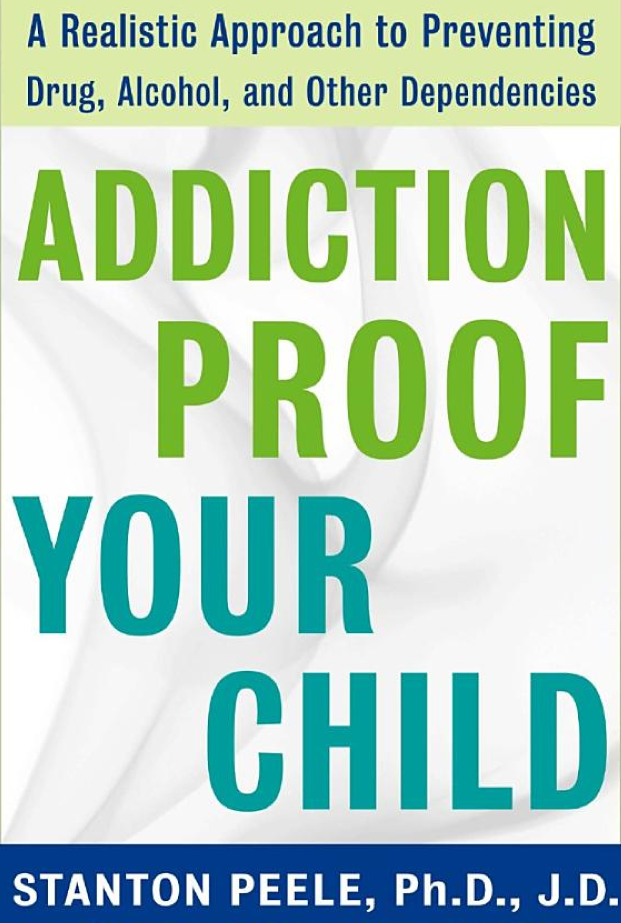
Stanton Peele is a rogue in the treatment industry.  Controversial is his middle name.  Check out his blog.  While your at it, look through his videos.   He doesn’t see addiction as a disease; but moreover a personal behavioral problem and more related to social ills.  His latest book Addiction Proof Your Child explores addiction in his own view which you can judge for yourself in Amazon’s expanded preview of the book.  It is actually a fairly big chunk of the book which is anything but traditional in what people believe about addiction and young people…and people in general.   It’s worth a look.

The Cullen’s story is one that can not be told enough.  Untold grief and sorrow lie in the wake of losing their son, Jeff to drug addiction.  Parents Fight Son’s Lost War With Drugs is a piece published by the Orange County Register and tells what far too many parents have already witnessed.   Gary and Denise fought through their grief and founded  Grasp. Its a website that grabs your heart as it is intended to help others with their losses.  They are also co-founders of  Moms United to End the War on Drugs. A million people live with the relentless impact of addiction every day.  The Cullen’s and many other remarkable citizens made a powerful impact in Southern California the summer 0f 2010 as we get closer to making a difference in saving more lives.

RECOVERY HELPDESK – Harm Reduction causes uproar.

Something is in the air! People are blogging. Movements are growingThe criminal justice system is under scrutiny. Reform is coming that can engage good screening and address addiction as causal where appropriate and deal with the disease seriously.  Those days are coming.  Trends show American’s are seeing addiction as a public health issue and a chronic liability that needs a stop valve.  Today we are seeing the Obama administration follow suit.  A May 11th article, New Obama Strategy Treats ‘War’ on Drugs as Public Health Issue shows this shift.  The ice of public denial is breaking.  The journalgazette.net calls Obamas recent actions a policy shift.  As American’s continue to voice out their losses and concerns, the levees of resistance to reform are giving way.  Americans want  drug law reform and full medical inclusiveness towards addiction and alcoholism.  It is not just a personal issue.  The fall-out affects all of us.  Keep talking and lobbying.  Your making a difference.  links from Mary S.

Meth:  Inside Out, is a powerful and engaging video series.   This you-tube site contains 31 video shorts all 3 to 5 minutes in length, covering every facet and angle of the world of methamphetamine use in America.

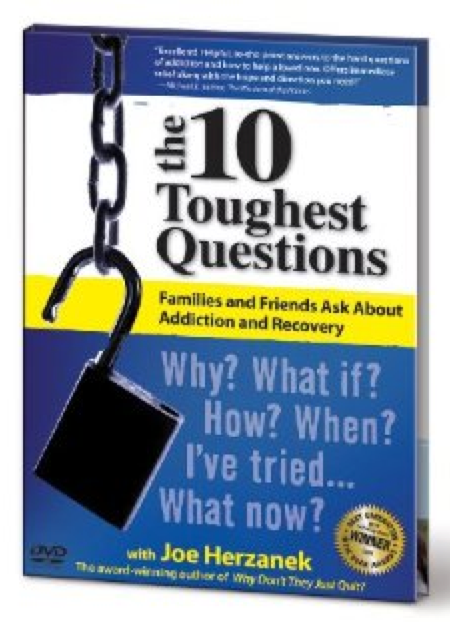
Seeing the obvious in the world of “insidious” addiction is like trying to see a forest through its trees.  Those who have felt the impact of an addict in their family knows how elusive the answers can be, let alone, the right questions.  Simple answers to basic questions makes a big difference.   Joe Herzanek has the answers to the 10 Toughest Questions Families and Friends Ask About Addiction and Recovery. His 22 minute video lays it out in plain language.  Joe speaks from his own experience.  After  three decades of sobriety, he still spends his personal and professional life helping others take that first step.  In 2007 he wrote a widely received book that tackled the biggest nagging question;  Why Don’t They Just Quit.  Now he offers the rest of the answers to the ten toughest questions in the video you shouldn’t miss.  Check out some excerpts. Joe and his wife, Judy Herzanek founded The Changing Lives Foundation and its blog; Why Don’t They Just Quit.  They both share a common bond in striving to make a difference by spreading the message that people do recover.

your views so far!

  • 119,022 site visits

CHECK OUT PAST POSTS HERE >

YOUR COMMENTS

Archive by Month

Calendar

January 2026
M T W T F S S
 1234
567891011
12131415161718
19202122232425
262728293031